Focus
Discovery • Research • Systems Thinking
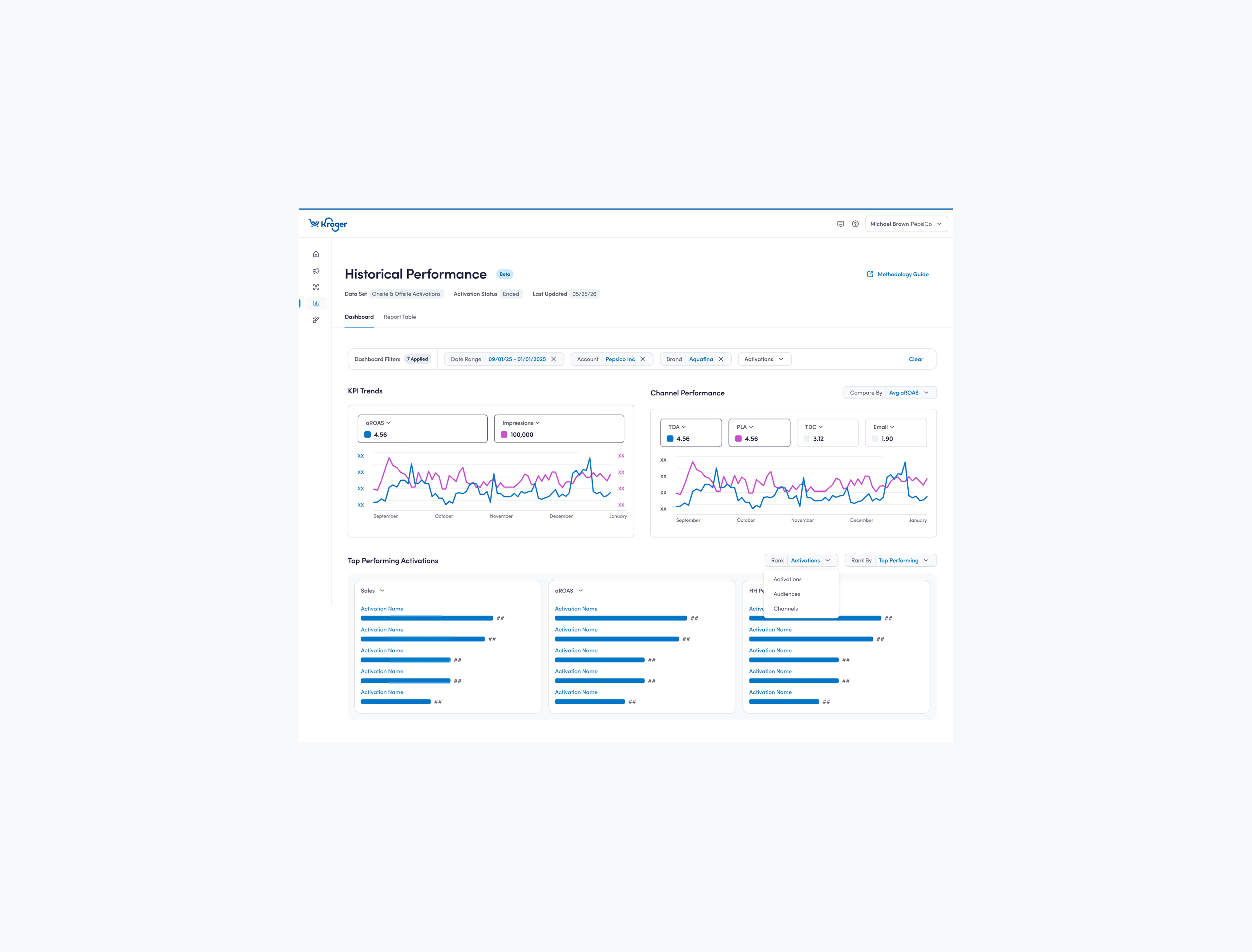
Consolidating 9+ disconnected reporting experiences into a unified dashboard
Context
Internal teams relied on multiple disconnected dashboards and reporting tools to monitor campaign performance and brand health. I conducted discovery across 9+ reporting experiences to understand workflows, identify inconsistencies, and define a more unified reporting direction validated through workshops and usability testing.
TLDR
Problem: Reporting workflows were fragmented across disconnected dashboards and inconsistent metrics
Solution: Consolidated reporting experiences into a unified dashboard framework
Impact: Reduced dashboard switching, improved reporting consistency, and streamlined decision-making
Validation: Discovery, workshops, and multiple rounds of usability testing informed the direction
Outcome: Consolidated dashboard developed, established reusable dashboard foundations with 3+ scalable patterns
My Role
Led end-to-end discovery, research, and UX strategy
Audited the reporting ecosystem to identify gaps, redundancies, and workflow pain points
Facilitated stakeholder workshops and synthesis sessions
Defined information architecture, reporting hierarchy, and scalable experience direction
Created reusable dashboard frameworks and reporting patterns
Problem
Reporting workflows were fragmented and difficult to scale
Teams relied on multiple disconnected dashboards to answer questions and communicate campaign performance holistically.
This created:
Repeated context switching
Inconsistent source-of-truth metrics
Manual aggregation and interpretation
Slower operational decision-making
"It’s the job of AEs/AMs and our clients to advocate for KPM investment, and we are making it hard for them to do that by requiring multiple tools be used for a holistic measurement analysis"
Discovery
Understanding the reporting ecosystem before defining a solution
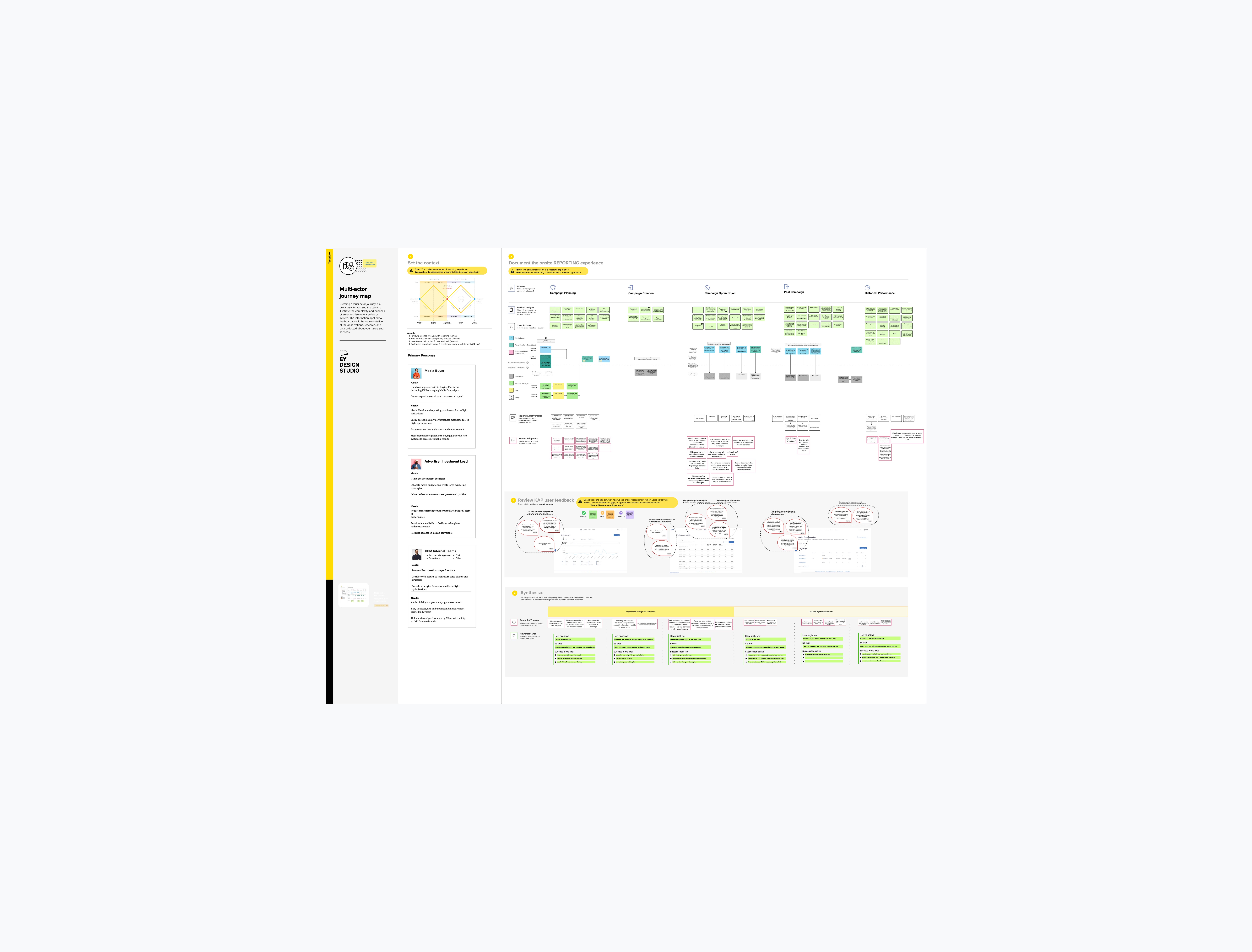
I conducted discovery across 9+ internal reporting experiences to identify:
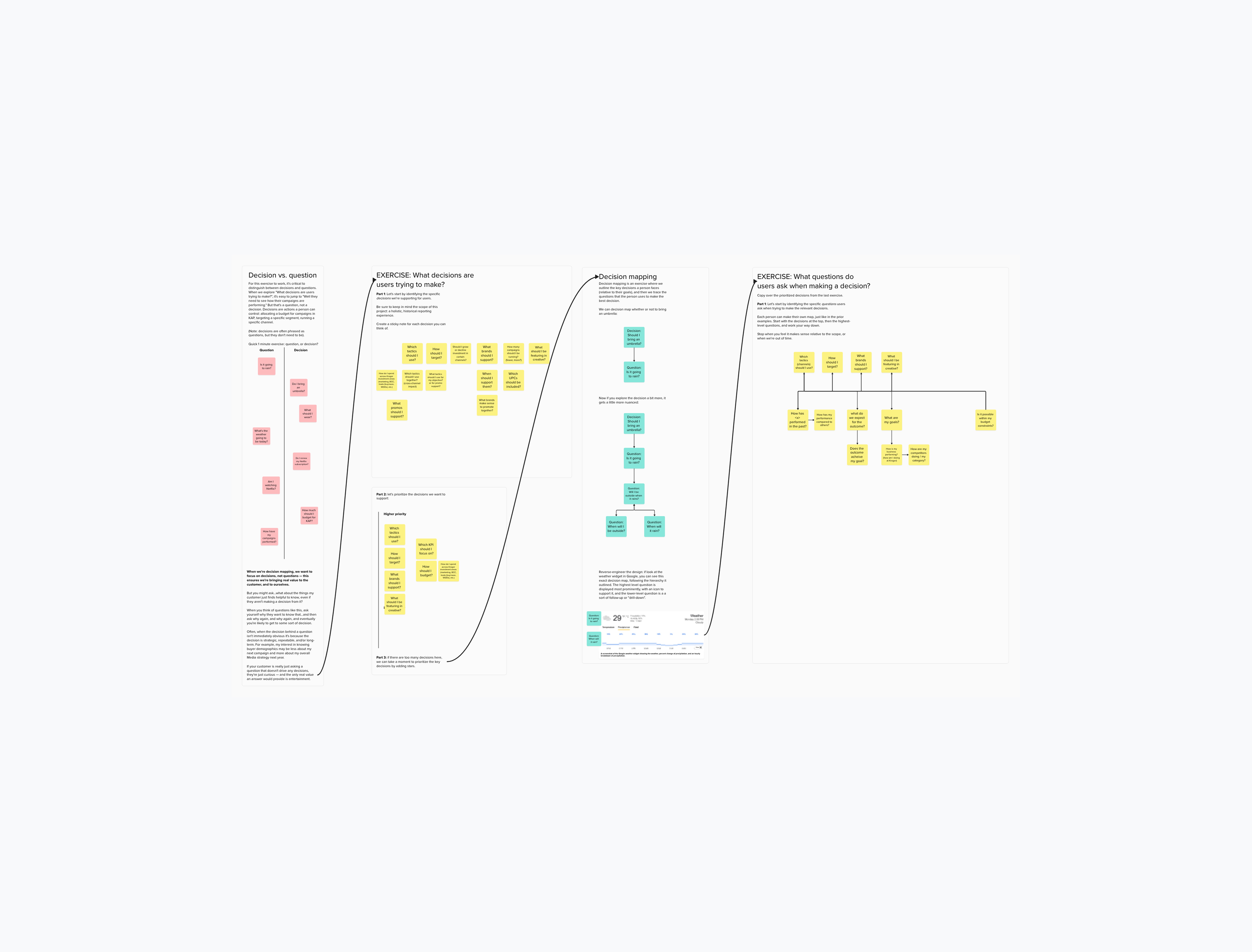
Common workflows and decision-making patterns
Metric inconsistencies and reporting gaps
Repeated user pain points
Opportunities for consolidation and standardization
Research activities included:
Dashboard audits and competitive analysis
Stakeholder interviews and synthesis
Journey mapping and workshop facilitation
Documentation and reporting ecosystem analysis
Opportunity
Create a unified source for operational decision-making
Instead of:
Search → compare → aggregate → act
Enable:
View → understand → decide → act
Goals:
Centralize insights across reporting experiences
Improve trust and consistency in metrics
Reduce manual effort and workflow fragmentation
Establish scalable dashboard foundations
Concept
Validating a more unified reporting experience
I created low-fidelity concepts and facilitated two rounds of usability testing focused on:
Navigation clarity
Cognitive load reduction
Terminology and reporting consistency
Usefulness and decision-making support
Feedback from testing informed prioritization, simplified workflows, and improved dashboard usability before refinement.

Impact
User Impact
Reduced dashboard switching and workflow fragmentation
Improved reporting clarity and consistency
Lower cognitive load through centralized insights
Business Impact
Reduced manual reporting effort and risk of human error
Established reusable reporting patterns and scalable foundations
Improved operational alignment across teams
Considerations
Data availability and reporting inconsistencies across systems
Balancing flexibility with standardization
Phased implementation to deliver value incrementally
Outcome
Consolidated 9+ fragmented reporting experiences into a unified dashboard direction
Established 3+ reusable dashboard components and reporting patterns
Improved reporting consistency and operational continuity
Created a stronger foundation for future reporting and visualization initiatives