Focus
UX • Collaboration • Influence
Turning UX feedback into prioritized product decisions
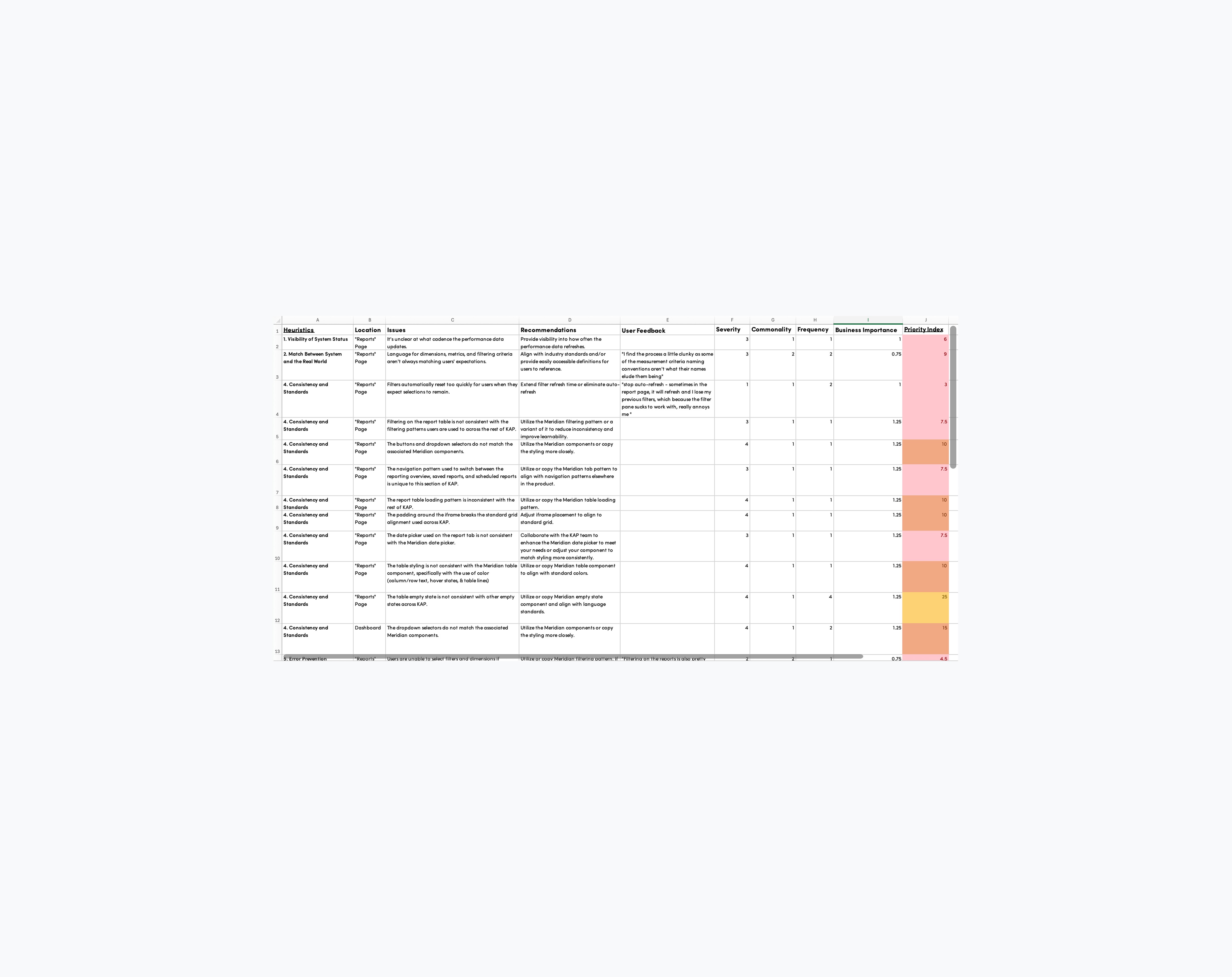
Usability issues were impacting key reporting workflows, but lacked a clear structure for identification and prioritization.
Campaign reporting in the Kroger Ad Platform was a top pain point. About 1/3 of SUS feedback mentioned it directly. However, issues were fragmented and lacked a clear way to identify and prioritize what to fix. I introduced a structured heuristic evaluation paired with a business priority index to align cross-functional teams on what to fix first—then partnered with a third-party design team to implement improvements.
TLDR
Problem: Reporting experience was receiving negative feedback but it was unclear which issues were most critical
Solution: Introduced heuristic evaluation framework + business priority index
Impact: Aligned teams and accelerated decision-making
Validation: Backed by user feedback + severity scoring
Outcome: 17/26 "critical" improvements implemented across reporting experience which increased usability and consistency while reducing time on task
My Role
Led UX evaluation and prioritization strategy
Implemented heuristic framework and scoring model
Partnered with product leadership to communicate priority decisions
Managed third-party design and engineering teams for execution
Guided implementation to align with design system standards
Problem
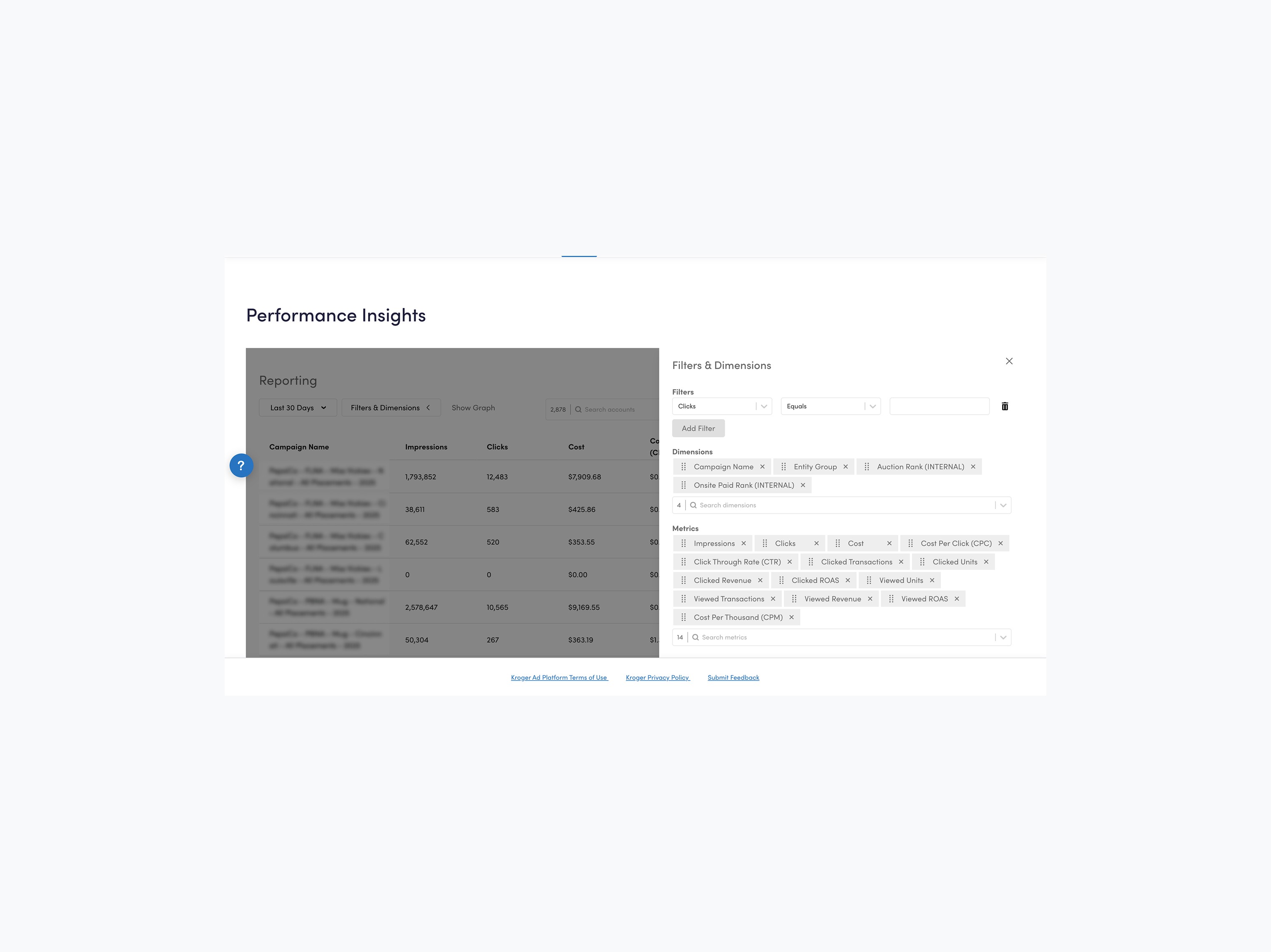
Reporting workflows were slow, inconsistent, and difficult to trust
Inconsistent patterns across reports and dashboard experiences
Confusing terminology and mismatched mental models
Frequent rework due to filters resetting
"Filtering on the reports is also pretty much impossible"
It was difficult to know where to start and which fixes would have the most significant user and business outcome
Opportunity
Bring structure and objectivity to UX decision-making
Instead of:
Identify → debate → guess priority
Enable:
Evaluate → score → prioritize → act
Experience (Before)
Solution
Created a repeatable system for UX evaluation with a heuristic + scoring system
Evaluated issues using established usability heuristics
Captured user feedback alongside observed issues
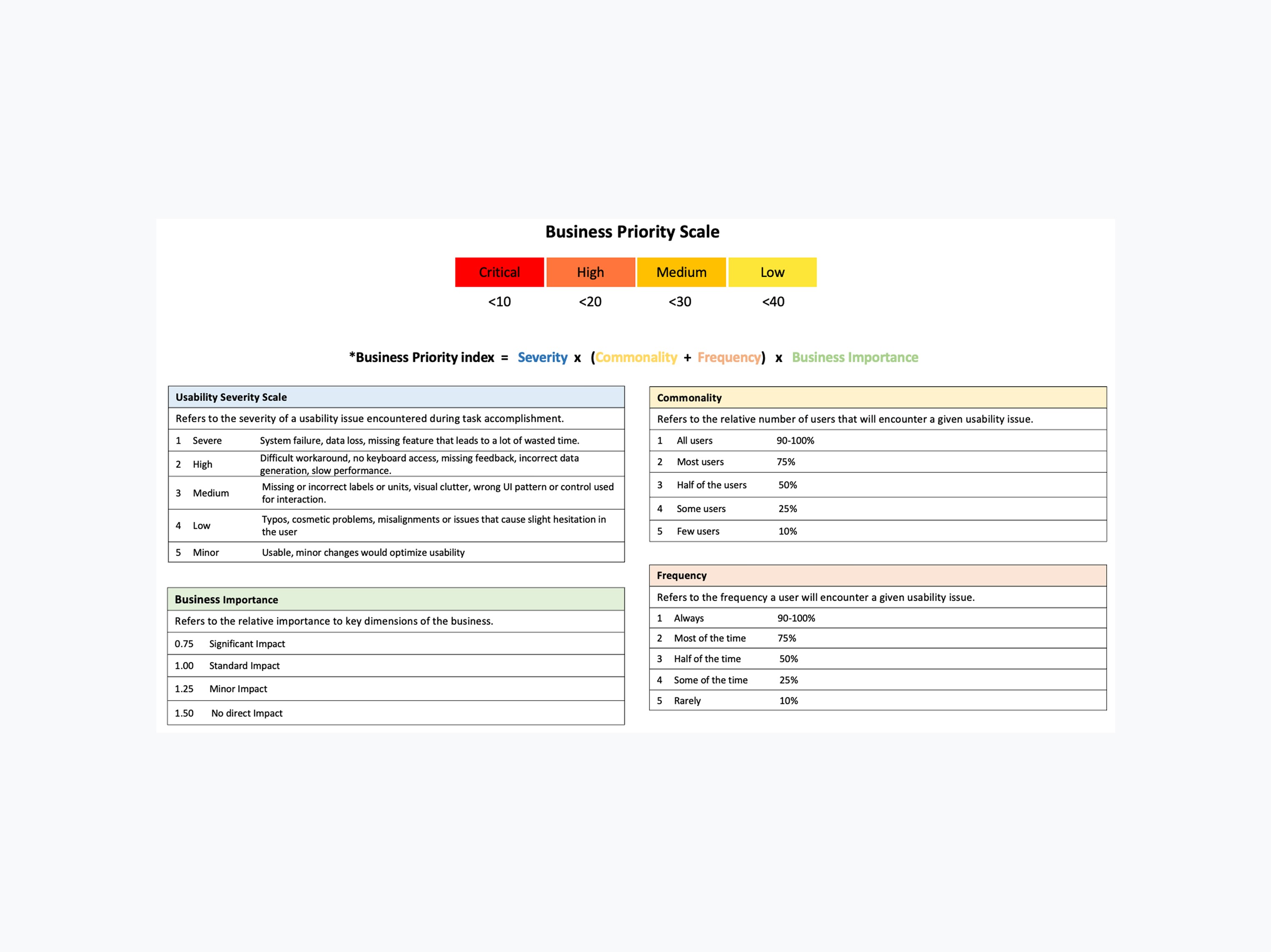
I partnered with product leadership to score each issue across:
Severity
Commonality
Frequency
Business impact
Leveraging the Business Priority Index reduced subjective debates and gave teams a shared, defensible way to prioritize work.
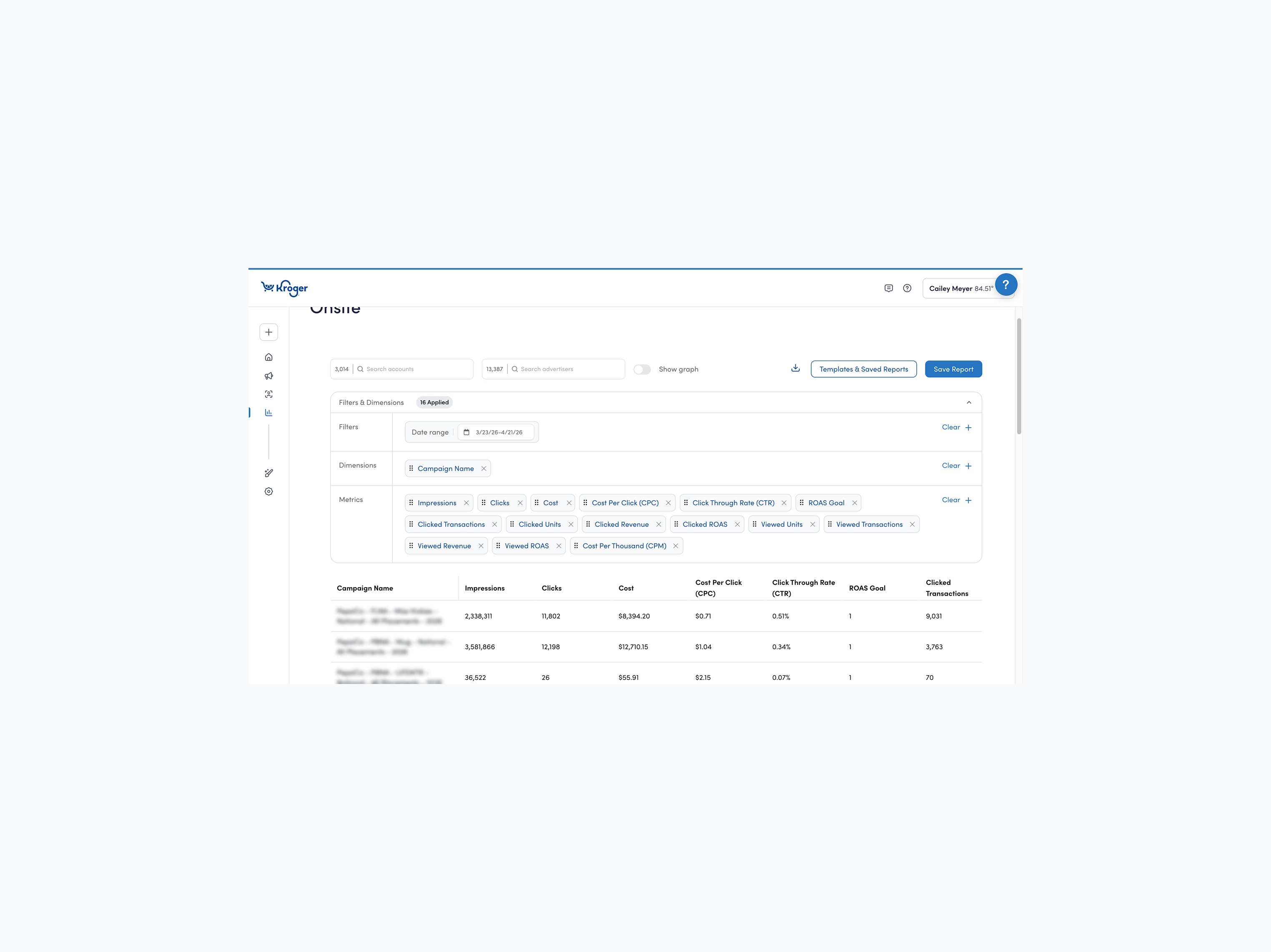
Experience (After)
Addressed 17/26 prioritized issues through targeted design changes
Main fixes centered around:
Filter usability and presets
Feature discovery
Terminology and status clarification
Consistency with platform patterns
I managed execution of design changes with a third-party design and engineering team, ensuring high UI standards and consistency with platform design system.
Impact
User Impact
More consistent and predictable reporting experience
Less time spent rebuilding views
Business Impact
Faster decision-making across teams and reduced time to decisions
More efficient use of design and engineering resources
Alignment with design system (Meridian) standards
Validation
Prioritization and changes backed by:
User feedback
Severity and frequency scoring
Cross-functional alignment improved (Product, Eng, Design)
Clear rationale for roadmap decisions
Considerations
Time and resource constraints: balancing quick wins vs. higher-impact systemic fixes
Outcome
UX framework adopted for ongoing prioritization
Championed process as a shared decision-making tool across teams